


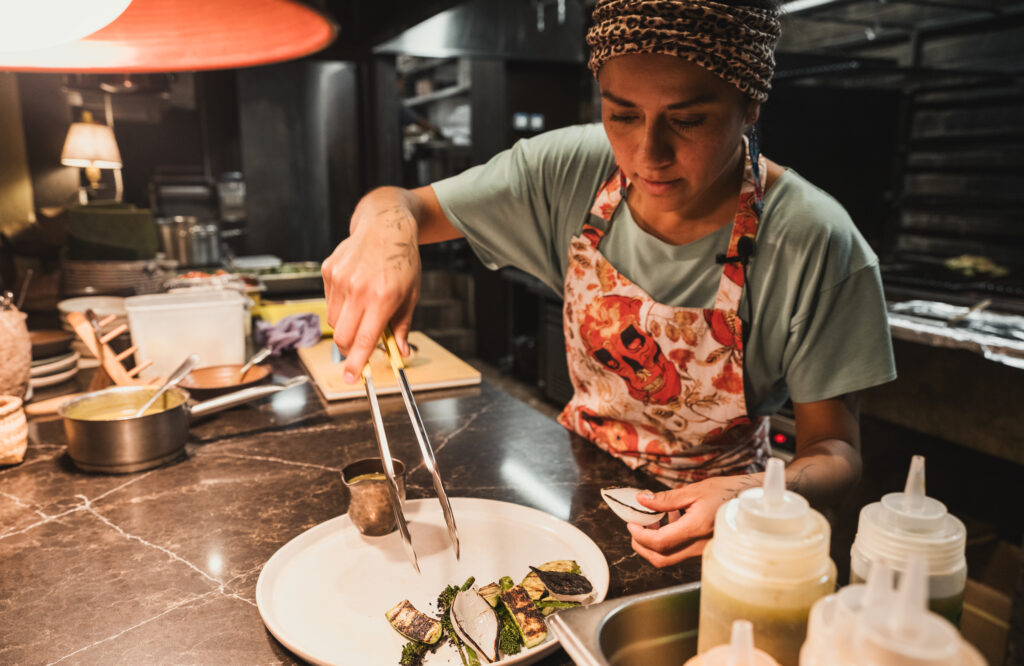
I have travelled far and wide across my home country of Mexico. One thing that always fascinates me is the depth of our mole tradition. People think that the Spanish brought mole to us: no, mole goes back much further than that.
The word itself comes from “molli” which means sauce in Nahuatl, an indigenous language still spoken today. Reading historical writers like Bernardino de Sahagún, a Spanish friar and missionary who wrote the book General History of the Things of New Spain, you will find that when the Spanish arrived there were already different moles for each of the traditional proteins; turkey, deer, squirrel, and fish from the lakes and sea.
We don’t have precise recipes because there were basically no recipe books, but varieties like pipián and totolmole are likely to be founding moles as they rely on ingredients that came before the Spanish: tomatillo, tomato, pumpkin seeds, chillies like guajillo, pasilla and serrano. Depending on the region, you might also find hoja santa or epazote. Some of them had a corn base (masa) for texture.
With the Spanish came new flavours and influences. Mexico became a stop on two major international trade routes – Seville to Veracruz and Manila to Acapulco – which brought in nuts and spices like cinnamon and cloves. Convents appeared across the country catering to wealthy Spanish landowners, known as hacendados. Using slave labour, these convents began to create more complex moles from expensive and exotic ingredients. They were thicker and richer than what had come before, designed for special occasions like weddings and birthdays. Styles like poblano and negro grew out of this and took mole away from its more humble roots.
Travelling around Mexico when I was younger, I connected with what we call “maestras cocineras” – women in their fifties, sixties, and seventies teaching people how to cook in their villages. Learning from them, seeing their methods, and witnessing how they cook in connection with the land was fascinating.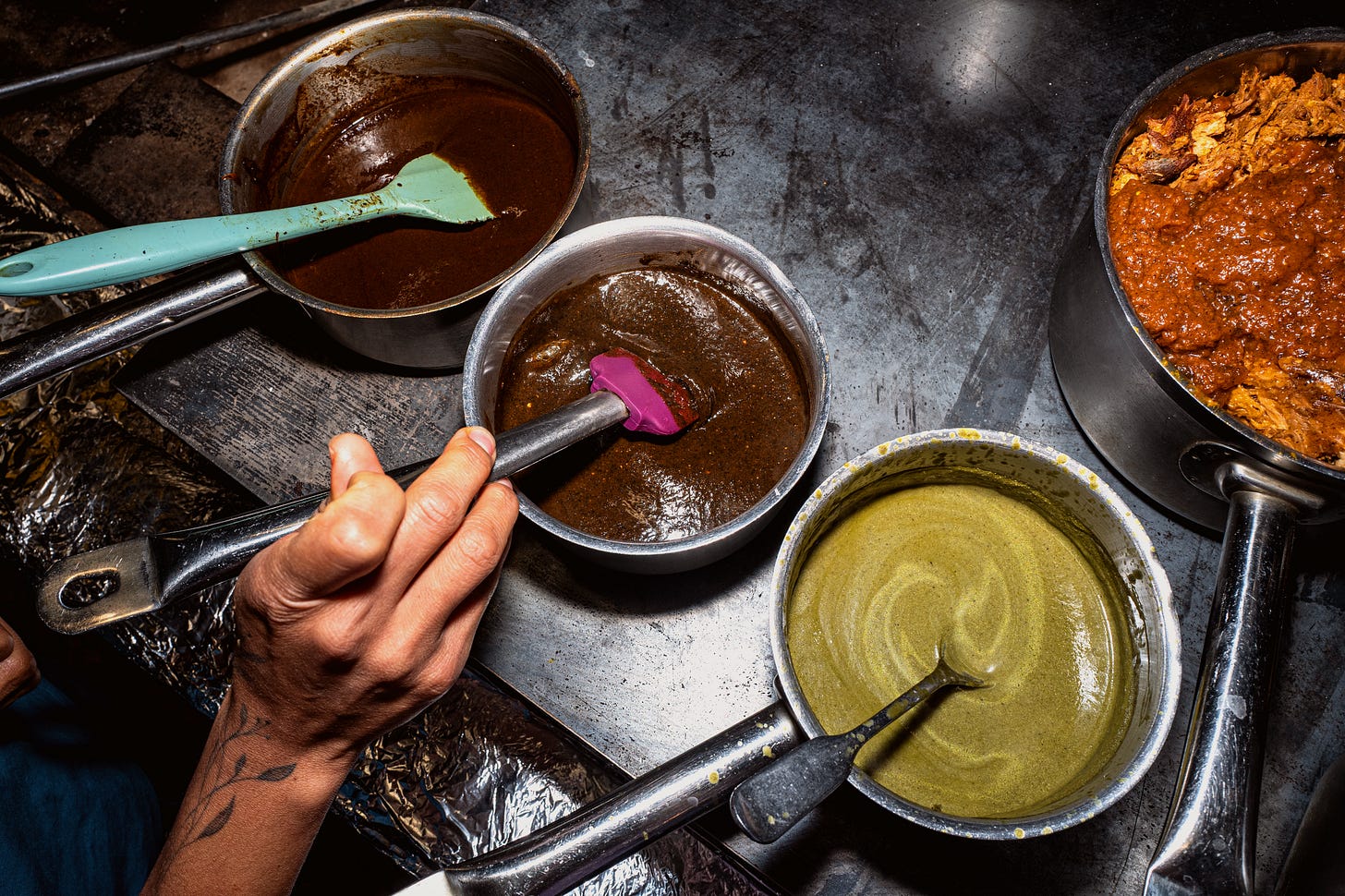
I lived with one maestra, Juanita, for eight months in Oaxaca. She practically adopted me. Juanita – who had learned from her aunt, herself a cook for the hacendados – taught me the mole preparations that I cook and teach to the team at my London restaurant, Cavita, today.
The moles I have chosen to spotlight here are more than just sauces. They are my connection to Mexican history and the long line of maestras that came before me.
Mole Chichilo
This one is traditional to Oaxaca. It’s not as common as some of the others but the most important to me. It’s definitely an acquired taste. Imagine taking a bite of the soil outside – that’s how it tastes.
It must be made precisely. I combine chillies that have been soaked overnight, tomato, onion, a bit of black pepper, and cinnamon. Depending on preference, you can use two different types of chillies – pasilla chilhuacle for a sweeter, prune-like taste or pasilla oaxaqueno for extra spiciness and smokiness. You must roast and burn them thoroughly, including the seeds, to bring out their flavour.
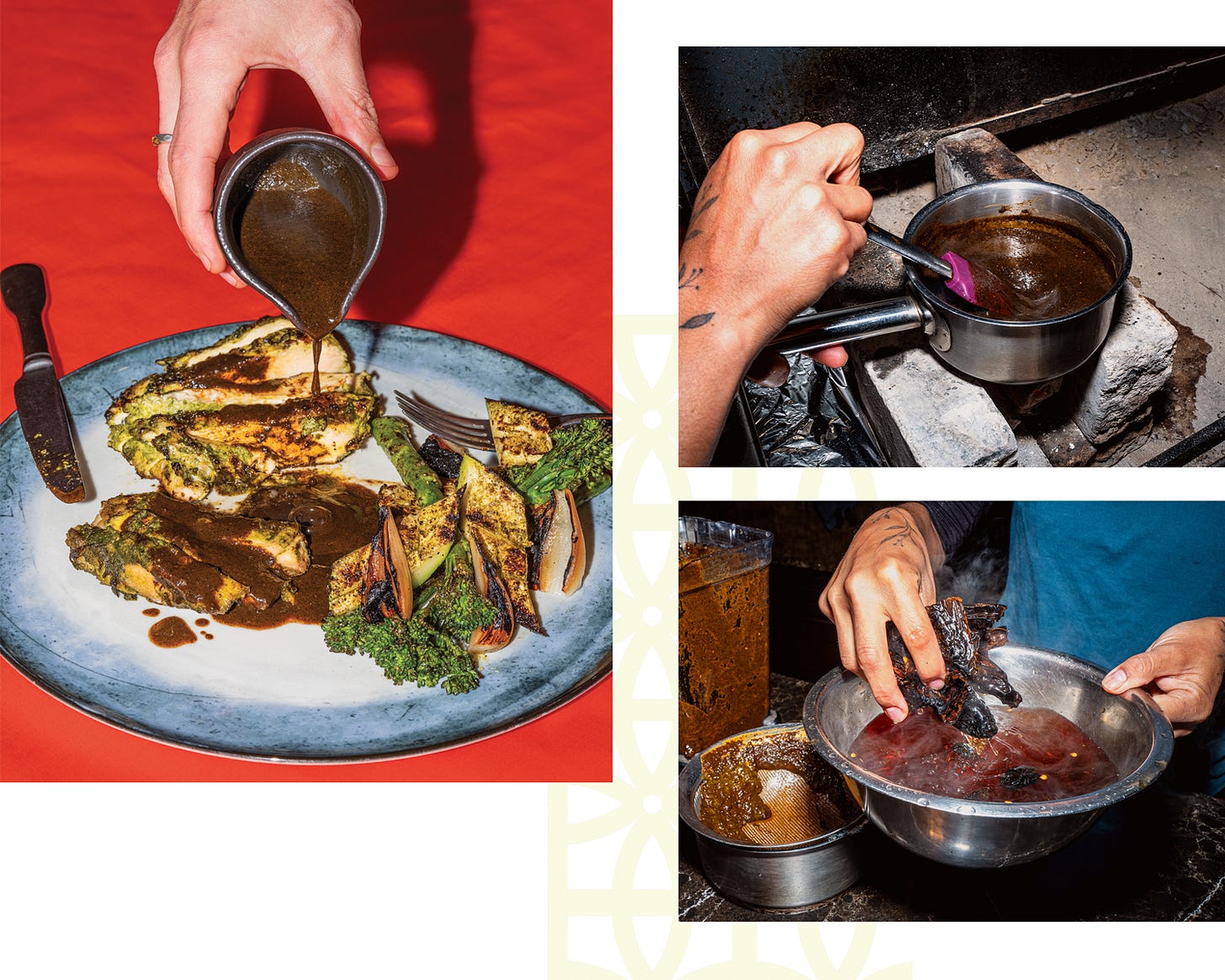
When the chillies are ready, I soak them in water for about 30 minutes to wash off the charring and remove the bitterness. While they’re soaking, I blend onion and garlic along with some masa for thickness. Then, I strain the mixture before cooking it in a pan with hot oil. Once the chillies are finished soaking, they go into a blender along with the tomato and stock. Which stock you use depends on how you intend to serve the mole; use chicken stock for chicken, pork stock for pork and so on. Finally, I strain the mixture into the same pan and mix everything until it turns into a nearly-black sauce.
Mole Verde
This one comes from the central areas of Mexico. It has a familiar flavour that takes me back to my childhood: spicy, nutty, savoury, and fresh without any acidity at all. It’s so comforting.
There’s a lot of variation across regions and families, but my recipe uses roasted pumpkin seeds, onion, garlic, tomatillo, jalapeño, parsley, and coriander. The herbs give the sauce that lovely freshness and green colour – some people add lettuce, too.

I cook the onion in oil for a few minutes before adding the garlic. Afterwards, I’ll add the tomatillo and jalapeño. I let them all cook for a bit before tossing in the roasted pumpkin seeds and broth. (Just like with chichilo, use whatever broth works best.) I leave that to simmer for 30 minutes, stirring every few minutes. Near the end, I’ll add some oregano and a dash of cumin. When everything’s ready, I leave the sauce to cool before blending it with more herbs – usually parsley, coriander, and mint – and straining.
Traditionally, mole verde is served with boiled chicken breast but I prefer using roasted chicken thighs for more flavour. At the restaurant, we butterfly and debone a whole chicken, marinate it in onion, parsley, coriander and a lot of garlic, and slowly barbecue it. The smoky flavour of the chicken pairs so well with the mole.
Mole Negro
Mole negro is another classic mole from Oaxaca. It must come from the convents because it’s not something that normal people can afford to make every day. Depending on the recipe, it uses around twenty to twenty five ingredients and takes a lot of work to put together. I only really make it on special occasions.
The one Juanita taught me uses a similar base to the other complex moles – sesame seeds and nuts like almonds and pecans (which you toast for a bit longer than other moles), toasted spices like cinnamon, star anise, cloves and cumin, and toasted avocado leaves, raisins, tomatillo, tomato, garlic as well as charred onion and plantain. Lightly toasted green herbs like thyme and oregano are also there. Sometimes I add stale bread, like the Spanish do with romesco, as it’s a good way to use it up and helps to thicken it.
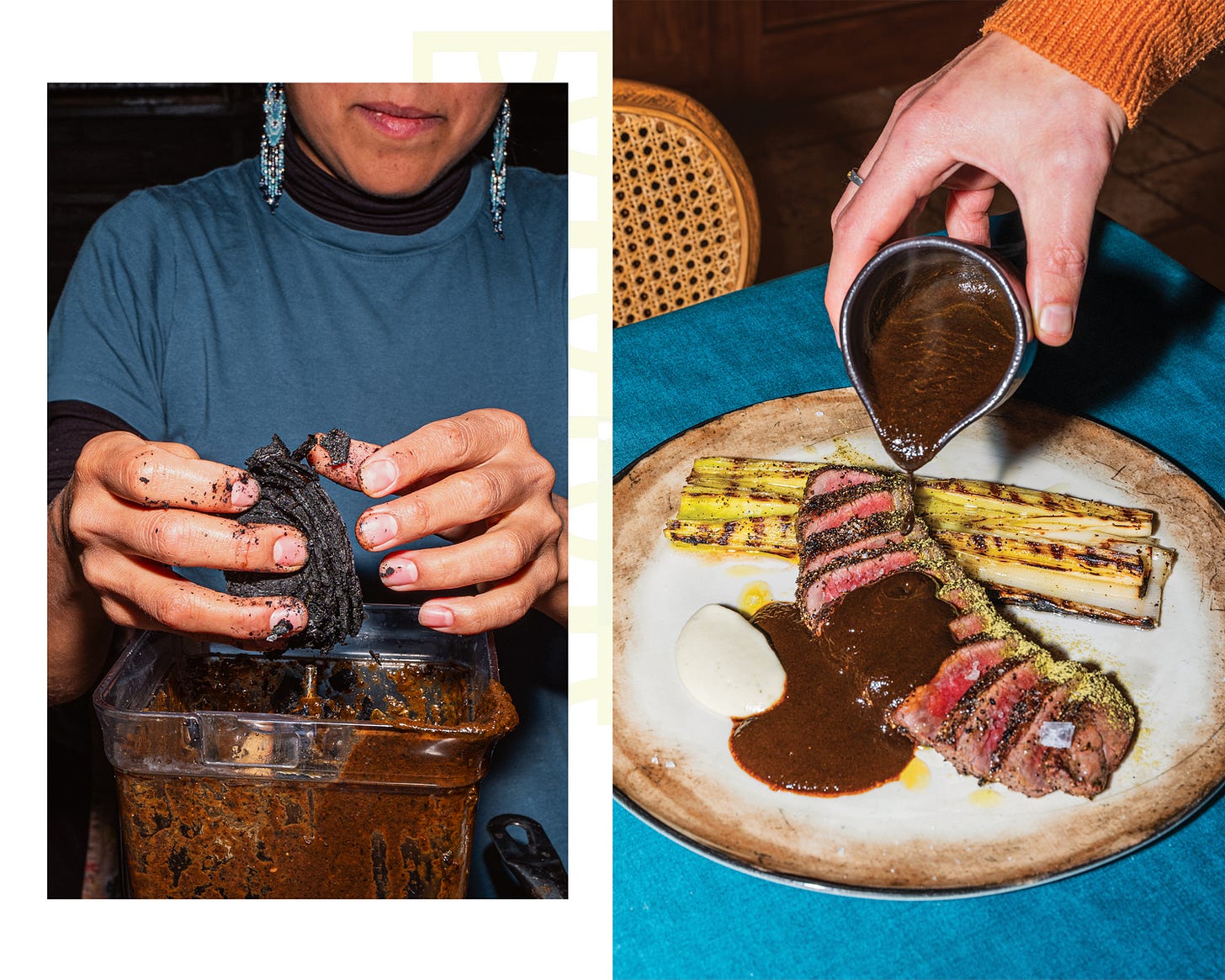
Separately, I make a base from dried chillies that have been soaked – preferably overnight. In Oaxaca it’s traditional to use chilhuacle – a black variety of chilli that has a really special smoky flavour – but in Europe it’s harder to get so I generally use a blend of guajillo, pasilla, and ancho. To make the base, you literally have to burn the chillies to get that dark colour and strong, smoky flavour, before submerging them in warm water for an hour and draining.
Then you combine both of the bases, add whatever stock you’re using, cook down for about 20 minutes and blend before seasoning with salt, sugar, and Oaxacan chocolate.
Mole negro is commonly served with turkey or deer, but it’s also good with lamb. I love to serve it with beef tongue and a native Oaxacan herb called pitiona.
By Adriana Cavita, as told to Isaac Parham
Photography by Stefan Johnson & Sarah Bennett